
Families and administrators often see a dietitian's visible work: menu reviews, a chat at care conferences. What they don't always see is the clinical documentation, regulatory compliance, and interdisciplinary coordination happening behind the scenes.
This article covers what dietitians actually do in long-term care, how they work with the care team, what regulations shape their role, and how to know if your facility has the right coverage in place.
Key Takeaways
- Individualized nutrition care plans, chronic disease protocols, and MDS Section K/V documentation anchor clinical quality in long-term care
- Cross-team work with nursing, speech therapy, dietary managers, and social services shapes each resident’s daily care
- CMS frameworks such as PDPM link nutrition documentation directly to reimbursement and survey outcomes
- Reliable dietitian coverage often needs a staffing partner when hiring gaps stretch 12 weeks or more
Key Responsibilities of a Dietitian in Long-Term Care Facilities
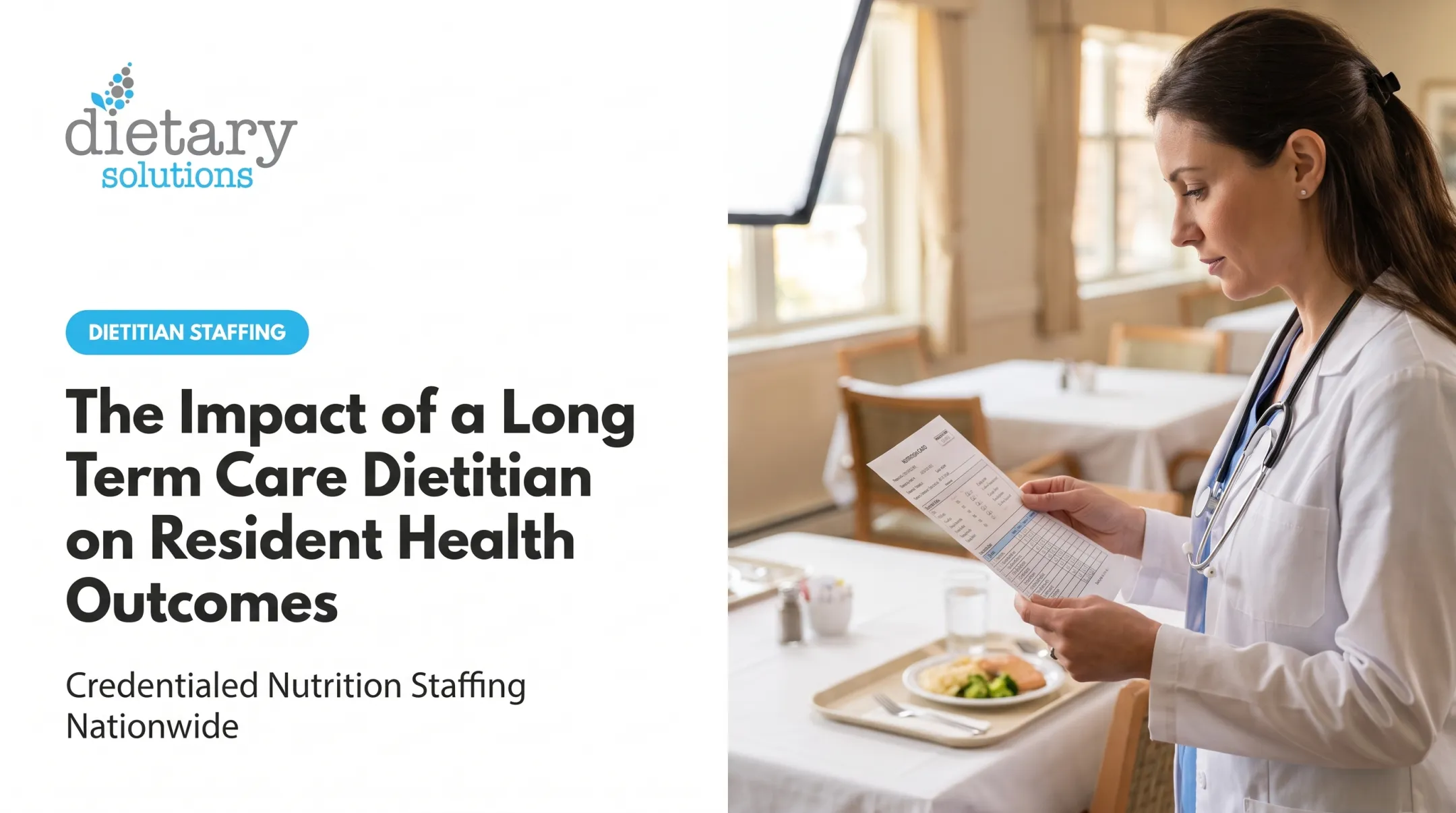
A long-term care dietitian's job starts with a comprehensive nutrition assessment: reviewing medical history, current medications, and relevant lab values to build a full clinical picture of the resident.
From there, responsibilities expand across several areas:
- Dietary preferences and restrictions: Balancing cultural, religious, and medically necessary modifications so residents still enjoy meals
- Chronic disease management: Using therapeutic diet strategies for diabetes, renal disease, and cardiovascular conditions
- Malnutrition and hydration risk: Identifying unplanned weight loss, poor intake, and dehydration before they become crises
- MDS documentation: Completing Section K (nutritional/swallowing status) and Section V care-area assessments
On the MDS side, precision matters. CMS's RAI Manual update (effective October 2025) refined coding guidance for weight loss (K0300) and weight gain (K0310) items in the CMS RAI Manual. Errors here affect care planning, survey outcomes, and payment accuracy.
Weight monitoring needs close attention. A 2026 study of nearly 60,000 newly admitted residents with obesity found 23% lost at least 10% of their body weight within the first year. Weight risk is not limited to frail or underweight residents; it applies broadly.
Choosing Between Therapeutic and Liberalized Diets
Not every clinical restriction should stay in place forever. Dietitians regularly weigh whether a therapeutic diet still serves the resident, or whether liberalizing it would improve quality of life without adding risk.
Factors that go into this decision:
- Age and prognosis: A strict renal diet may matter less for a resident in late-stage decline
- Appetite and intake trends: If restrictions are suppressing overall food consumption, the risk-benefit shifts
- Resident preference and rights: Participation in food choices is linked to enjoyment and intake
- Ongoing monitoring capacity: Liberalization requires tracking weight, labs, or symptoms afterward

The right approach is to individualize the decision, document the rationale, and monitor the outcome.
How Dietitians Collaborate with the Long-Term Care Team
Nutrition care in long-term care is never a solo act. Dietitians sit at the center of a web that includes nursing, speech therapy, dietary managers, and family.
Nutrition At Risk (NAR) meetings are a key touchpoint. These sessions bring nursing and therapy staff together to review weight changes, wounds, and nutrition support needs for residents flagged as high-risk.
Other collaboration points include:
- Speech-language pathologists: coordinating texture-modified diets and swallowing safety plans
- Dietary managers: working on menu development, tray card accuracy, sanitation audits, and food cost control
- Care plan meetings: contributing at quarterly and significant-change reviews with residents and families present
This teamwork produces measurable results. A U.S. quasi-experimental study across two nursing homes found that a structured nurse-dietitian-pharmacist process improved albumin, prealbumin, and depression scores. 68% of identified nutrition problems improved or resolved during the intervention (INRx study).

Dietary Solutions builds its consulting model around this same collaborative structure. Its Tray Card System, for example, helps the correct diet reach the correct resident and supports the dietitian–dietary staff communication these outcomes depend on.
Common Nutrition-Related Challenges in Elderly Long-Term Care Residents
Several recurring issues demand a dietitian's close attention:
- Unintentional weight loss — often the first visible sign of an underlying medical or psychosocial issue
- Dysphagia (swallowing difficulty) — requires screening and coordinated texture modification
- Dehydration — easy to overlook until it triggers a hospital transfer
- Pressure injuries — higher protein and calorie targets are often needed to support wound healing
These challenges rarely occur in isolation. Reduced appetite, medication side effects, and cognitive decline (including dementia) frequently compound each other, making a resident's nutrition status harder to stabilize. A dietitian untangles these overlapping factors and adjusts the care plan before small declines become serious.
Nutrient-dense foods (protein-forward options, fiber, and hydration-rich choices) help counter these issues. The right approach still depends on each resident's medical status, so decisions should run through the facility's dietitian rather than a generic template.
Regulatory Compliance and the Dietitian's Role in Surveys
Nutrition documentation is directly tied to CMS survey outcomes and reimbursement. It is not optional paperwork. Under the Patient-Driven Payment Model (PDPM), the Non-Therapy Ancillary (NTA) component uses a weighted point system tied to qualifying conditions and services, including malnutrition, feeding tubes, and IV nutrition. CMS assigns weights from 1 to 8 per qualifying item, with high-level parenteral IV feeding at 7 points and IV medication at 5 points (CMS PDPM fact sheet). Accurate documentation here directly affects a facility's reimbursement classification. That documentation holds up in a survey only when a qualified professional completes it. A Registered Dietitian (RD) must complete:

- Graduate-level education
- ACEND-accredited coursework and supervised practice
- The national registration exam through the Commission on Dietetic Registration State-specific licensure requirements may add further conditions on top of the RD credential. Because these compliance stakes are high, Dietary Solutions verifies credentials, runs background checks, and completes competency evaluations before any professional is placed. The company reports a 95% clinical-nutrition deficiency-free survey rate across its client facilities.
Why Facilities Partner with a Dietitian Staffing and Consulting Provider
Even well-run facilities hit gaps. A dietitian goes on medical leave. A survey lands unexpectedly. A search for a permanent hire drags on.
That last point isn't hypothetical: filling a vacant dietitian role can take 12 weeks or more. During that window, care plans, MDS documentation, and compliance readiness can't simply pause.
This is where a nutrition consulting and staffing partner fills the gap. Dietary Solutions maintains a nationwide network that includes:
- Registered Dietitians and Certified Specialists in Gerontological Nutrition
- Certified Nutrition Support Clinicians
- ServSafe-certified food service professionals
Beyond placement, the value shows up in ongoing support:
- Credential verification and competency evaluation before a professional ever starts
- Onsite training in facility-specific protocols
- 24/7 backup support from Regional Directors of Operations, so facilities aren't stranded when a consultant is off-site
Facilities have used this model during medical leave, staffing transitions, and COVID-era disruptions. Interim coverage helped restore nutrition operations that pandemic staffing shortages had derailed.
Frequently Asked Questions
Is it worth paying for a dietitian?
Yes. Dietitian involvement is often required for regulatory compliance in long-term care, and it directly supports better resident outcomes, fewer hospitalizations, and stronger survey readiness, so most facilities treat it as a core operating cost.
How often do I need to see a dietitian?
Assessment frequency varies by facility policy and resident risk level, but residents are typically evaluated on admission, then more frequently during the first month, tapering to monthly or quarterly for stable residents. High-risk residents are seen more often.
What is a nutrition care plan?
It's an individualized document outlining a resident's nutrition-related risks, goals, and interventions. It gets reviewed and updated at each assessment or whenever there's a significant change in condition.
Can you give me an example of a long-term nutritional goal?
A common example: maintaining stable body weight within a target range over 90 days through fortified foods, supplement use, and regular weight monitoring.
Is it better to see a dietitian or a nutritionist?
Registered Dietitians (RDs) have standardized graduate education, supervised clinical training, and national credentialing required to practice in long-term care. "Nutritionist" is a far less regulated title with no standardized meaning.
What are three common nutrition-related problems in the elderly?
Unintentional weight loss, dehydration, and dysphagia (swallowing difficulty) top the list of concerns dietitians regularly address in long-term care settings.